
Understanding how house painting companies calculate estimates helps homeowners plan, budget, and compare quotes with confidence. Rather than a single calculation, estimates factor in materials, labor, surface conditions, and market variables that shape both pricing and project scope.
Knowing what goes into an estimate allows homeowners to ask better questions and avoid unexpected costs. A transparent process benefits both sides by setting clear expectations, supporting accurate timelines, and leading to smoother, more successful projects.
Key Factors That Influence a Painting Estimate
Size of the Space
Square footage is one of the most influential factors in any painting estimate. Larger areas require more paint, more labor, and more time, which directly increases cost.
Contractors measure wall dimensions carefully to calculate material needs and labor hours accurately.
Most estimates are based on a per–square–foot model, which helps standardize pricing across different projects. However, layout matters as much as size. Tall ceilings, stairwells, or complex architectural details can add time and difficulty, increasing the overall estimate.
Paint Type and Materials
Paint quality significantly impacts cost. Premium paints generally last longer, cover better, and provide a more consistent finish, but they also come with higher material costs. Sheen level—flat, eggshell, satin, or gloss—can also affect pricing due to differences in durability and application difficulty.
Specialty paints, such as low-VOC, mildew-resistant, or eco-friendly options, may further increase costs. While these materials cost more upfront, they often provide long-term value through durability and performance.
In addition to paint, estimates include primers, caulking, masking materials, and finishing products. These materials are essential for proper adhesion and a professional finish, making them a non-negotiable part of a quality estimate.
Labor Costs
Labor typically represents a large portion of the total estimate. Rates depend on the painter’s experience, job complexity, and regional market conditions. Skilled painters may charge more, but they often work more efficiently and deliver higher-quality results.
Time-intensive tasks—such as surface preparation, priming, detail work, and cleanup—are all factored into labor calculations. Some contractors charge hourly, while others offer flat-rate pricing based on the project scope.
How Professionals Measure Paintable Areas
Square Footage Calculations
Accurate measurements are critical to reliable estimates. Painters calculate the total wall area, then subtract windows and doors to determine the net paintable surface. Tools like laser measurers improve accuracy and reduce guesswork.
Surface texture also matters. Rough or porous surfaces may require more paint or additional coats, which affects both material and labor costs. These details are noted during the initial assessment to avoid underestimating the project.
Windows, Doors, and Trim
While windows and doors reduce wall square footage, they add complexity. Trim, frames, and sills often require detailed work and different materials. Estimates account for both the reduced wall area and the added labor involved in finishing these features properly.
Homes with extensive trim or decorative elements may see higher costs due to the skill and time required. Clarifying whether trim is included in the estimate helps prevent scope disputes later.
Wall Condition Assessment
Wall condition plays a major role in pricing. Cracks, holes, peeling paint, or water damage all require prep work before painting can begin. This preparation ensures proper adhesion and a smooth final finish.
Older homes may need additional work, such as sanding or paint removal, which increases labor time. Contractors factor these conditions into the estimate to ensure realistic pricing and timelines.
Seasonal Demand and Pricing
Peak vs. Off-Peak Timing
Seasonal demand affects availability and pricing. Warmer months often bring higher demand, especially for exterior projects, which can lead to increased rates. Booking during peak season may also require longer lead times.
Off-peak periods can offer more flexible scheduling and, in some cases, lower pricing. Planning allows homeowners to secure better availability and avoid premium rates.
Painter Availability and Promotions
During busy seasons, experienced painters may be booked weeks in advance, increasing competition for their time. Some companies offer promotions during slower periods to balance their workload, such as discounted labor or material incentives. Homeowners asking about seasonal deals or flexible scheduling can help homeowners manage costs without sacrificing quality.
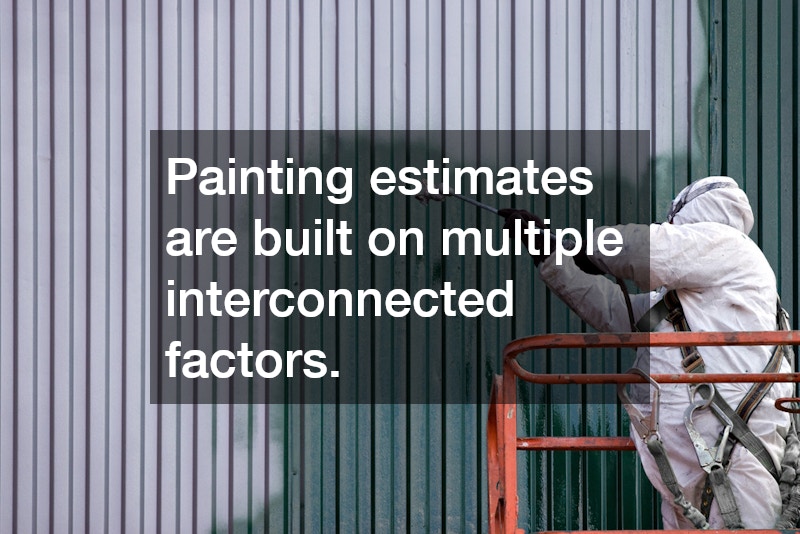
When homeowners understand how house painting companies develop their pricing, they can compare quotes more effectively and set realistic expectations. Painting estimates are built on multiple interconnected factors, including space size, materials, labor, wall conditions, and seasonal demand. A well-prepared estimate reflects not just the price, but the quality and thoroughness of the work being proposed. Clear communication, detailed assessments, and transparent proposals are key indicators of a professional contractor.