Highlights
- Aging paver surfaces can often be restored without replacing the entire paved area.
- Uneven units, missing joint material, stains, and drainage problems can signal that repairs are needed.
- Restoration may include cleaning, releveling, replacing damaged pavers, and refilling joints.
- A stable base and properly filled joints help support an even, durable finished surface.
- Routine inspections can reveal small defects before they spread across a larger area.
- Professional restoration can improve appearance, function, drainage, and long-term maintenance planning.
How Can Aging Paver Surfaces Be Restored?
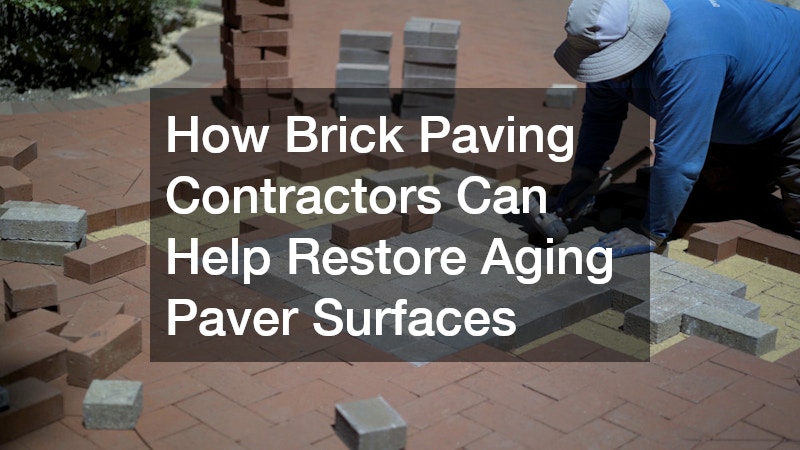
Aging paver surfaces can often be restored by correcting the problems that have developed rather than removing the entire installation. Brick paving contractors begin by examining the surface for sunken areas, loose or cracked units, failed edging, empty joints, stains, weeds, and signs that water is collecting where it should not. From there, the work may involve lifting selected pavers, correcting the bedding or base beneath them, resetting usable units, replacing damaged pieces, cleaning the surface, and replenishing joint material.
This targeted approach can preserve much of the original pavement while addressing the conditions that make it look worn or feel uneven. Restoration is especially useful when the majority of the pavers remain structurally sound. By focusing repairs where deterioration is occurring, homeowners can regain a cleaner, more stable surface while retaining the established pattern, color variation, and character of the existing paved area.
What Problems Should Be Addressed First?
- The most important problems to address first are those that affect stability, drainage, and safe use of the surface. Cosmetic cleaning can improve appearance, but it will not correct pavers that have shifted because of an unstable base or missing joint material. A careful inspection should identify where repairs need to start and which issues may be connected.
- Sunken or raised pavers can create uneven walking areas and may point to movement beneath the surface.
- Cracked or badly chipped units should be evaluated for replacement, especially when damage affects the integrity of the paved area.
- Empty or eroded joints can allow greater movement and should be refilled with the appropriate material.
- Loose edge restraints may let perimeter pavers spread outward and disrupt nearby rows.
- Standing water can indicate grading, drainage, or settlement concerns that should be corrected before surface finishing.
- Heavy staining, moss, and embedded debris may require cleaning methods selected for the specific paver material.
Why Do Base and Joint Conditions Matter?
Base and joint conditions matter because pavers depend on the layers beneath and between them for support, alignment, and load distribution. When bedding material shifts, the underlying base settles, or joint material disappears, individual pavers can move even if the units themselves are still in good condition. Guidance from the Federal Highway Administration recommends inspecting permeable interlocking concrete pavement for settlement, ponding, cracked pavers, edge-restraint problems, and sediment buildup. It also calls for replenishing joint aggregate when necessary and repairing significant surface deformation. Although residential brick installations vary in design, the same principle is useful during restoration: visible surface movement often deserves investigation below the surface. Brick paving contractors can lift affected areas, rebuild or adjust the supporting layer as needed, and reset the pavers to create a more consistent elevation instead of simply masking the symptom from above.
How Can Cleaning Improve an Older Paver Surface?
Cleaning can improve an older paver surface by removing accumulated dirt, organic growth, residue, and debris that hide the appearance and may interfere with joints or drainage. The method should match the paver material and the condition of the installation because excessive pressure or an unsuitable cleaner can create new problems. For permeable pavement systems, the U.S. Environmental Protection Agency notes that maintenance may include cleaning or refreshing permeable media and that specialized equipment, such as vacuum-powered sweepers, may be appropriate for certain permeable surfaces. Residential restoration does not always require that equipment, but the broader lesson is important: accumulated material should be removed without damaging the pavement system. After cleaning, contractors can see staining, cracks, low spots, joint loss, and other defects more clearly. That makes it easier to decide what should be repaired before the surface receives any optional finishing or protective treatment.
What Steps Can Help the Restored Surface Stay Stable?
- Several steps can help a restored surface remain stable after the visible problems have been corrected. The exact process depends on the paver type, base construction, site drainage, and intended use, but a complete restoration should address the system rather than only the top face of the bricks.
- Reset repaired pavers on a properly prepared and level supporting layer instead of placing extra material only in isolated low spots.
- Refill joints completely with a compatible material so adjacent units can work together rather than shift independently.
- Confirm that perimeter restraints remain secure and continue holding the pattern in place.
- Check finished elevations so water moves away from structures and does not remain trapped in repaired depressions.
- Replace individual units that are too damaged to provide reliable service or match surrounding elevations.
- Keep the surface free of excessive sediment and debris that can collect in joints or drainage openings.
- Rutgers University explains that suitable sand supports interlock and drainage in concrete paver installations, reinforcing why joint and bedding conditions deserve attention during restoration.
Why Is Professional Paver Restoration Worth Considering?
Professional paver restoration is worth considering because a worn surface may contain several overlapping issues that are difficult to solve with cleaning alone. An experienced contractor can distinguish between superficial discoloration, isolated paver damage, joint deterioration, drainage concerns, and settlement that requires lifting and resetting part of the installation. This helps direct effort toward the actual cause instead of repeatedly treating the same visible symptom. Details beneath the finished surface can strongly influence how well an aging paver system drains, stays aligned, and responds to continued foot traffic or regular everyday use. When aging pavement is evaluated as a complete system, restoration can preserve usable materials, renew the appearance of patios or walkways, and improve day-to-day function. Brick paving contractors can help homeowners turn a tired, uneven paved area into a cleaner, more stable surface that is better prepared for continued use.