
A peeling paint job or a few loose shingles might seem like routine upkeep, but exterior wear often hints at something bigger brewing beneath the surface. Homeowners who catch these early warning signs can avoid emergency repairs, protect their property value, and plan projects on their own timeline instead of scrambling after a failure.
This guide walks through the most telling signs of exterior trouble and what they usually mean for your home. Knowing what to look for now can save you thousands of dollars and a lot of stress later.
Shingle Granules Collecting in Gutters and Downspouts
Finding gritty, sand-like granules piling up in your gutters is one of the clearest signals that your roof is aging past its prime. These granules protect shingles from UV rays, and once they start shedding in large quantities, the shingles underneath lose their protective layer and become brittle. A few granules after a storm are normal, but consistent buildup over several seasons usually points to roofing material nearing the end of its lifespan. This is often the point where homeowners start getting quotes from roofing companies rather than continuing with patch repairs. Many of these companies send experienced roofers to the property first to assess the extent of the wear before recommending a replacement timeline.
It is worth climbing a ladder, or asking a professional to do it safely, to visually inspect the shingles themselves once you notice granule loss. Bald spots, curling edges, or exposed asphalt are all signs that a full replacement is closer than a simple fix. Waiting too long risks water intrusion that can damage decking, insulation, and even interior ceilings.
- Check gutters after heavy rain or wind for unusual granule accumulation
- Look for shiny or dark patches on shingles, which indicate granule loss
- Note how old your roof is, since most asphalt shingles last 20 to 25 years
- Schedule a professional inspection if granule loss is paired with visible curling
Soft or Spongy Spots on Deck Boards

Walking across your deck and feeling give underfoot is never a good sign, even if the wood looks fine on the surface. Spongy spots usually mean moisture has worked its way into the boards or the structural framing beneath them, leading to rot that spreads faster than most people expect. This is especially common around ledger boards, stair stringers, and any area where water tends to pool after rain. Left unaddressed, soft spots can eventually lead to a partial collapse, which is a serious safety hazard for anyone standing on the deck.
If the damage is isolated to a few boards, a repair might suffice, but widespread softness often signals that the entire structure needs reassessment. Many homeowners find this is the right time to consult custom deck builders who can evaluate whether the existing frame is salvageable or whether a full rebuild makes more sense. A professional can also recommend materials better suited to your climate, which may prevent the same problem from recurring in just a few years.
Cracked or Settling Concrete Walkways and Driveways
Hairline cracks in concrete are common and usually cosmetic, but wider cracks, uneven settling, or sections that have visibly sunk tell a different story. These issues often point to soil erosion, poor drainage, or an unstable base beneath the slab that will only get worse with time. Water that pools in low spots during rain is a strong clue that the ground underneath has shifted. Ignoring these signs can lead to tripping hazards and more expensive foundation-related repairs down the road.
Before pouring new concrete, it is important to address whatever caused the original settling, whether that means improving drainage or compacting the soil properly. Homeowners tackling a larger driveway or patio replacement sometimes bring in heavy equipment rental to handle excavation and grading efficiently rather than relying on manual labor alone. Getting the groundwork right the first time prevents the same cracking pattern from reappearing in a new slab.
Fading, Chalking, or Peeling Siding
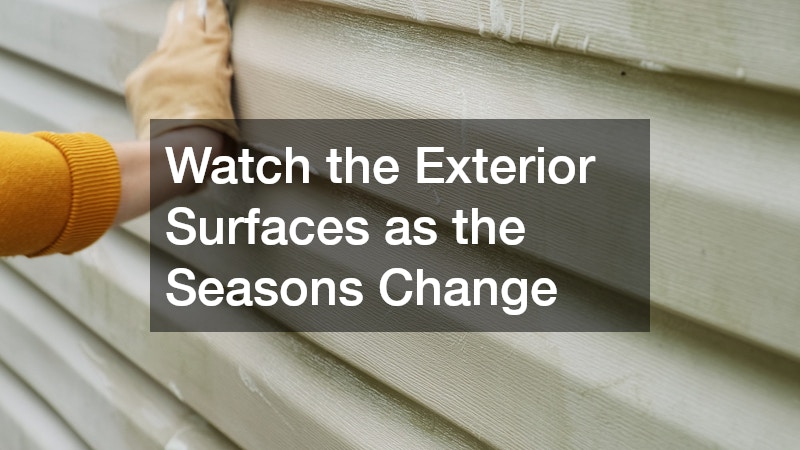
Siding is your home’s first line of defense against weather, so visible deterioration deserves attention sooner rather than later. Chalking, where a powdery residue rubs off on your hand when you touch the siding, indicates the protective finish is breaking down. Peeling or bubbling paint often means moisture is trapped underneath, which can lead to mold growth or wood rot if the siding material is not vinyl or fiber cement. These are cosmetic issues at first, but they rarely stay that way for long.
- Press on siding near the bottom edges to check for soft, water-damaged spots
- Look for gaps or warping where siding panels meet windows and doors
- Check for discoloration that suggests mold or mildew growth behind the surface
- Note whether fading is uniform or patchy, since patchy fading can mean inconsistent moisture exposure
Fence Posts That Lean, Wobble, or Show Rot
A fence that once stood straight and sturdy but now leans even slightly is often dealing with a failing post base, whether from rotted wood, rusted hardware, or shifting soil. Wobbly posts are a structural problem, not just a cosmetic one, since the entire fence line depends on each post holding firm. Wood fences are particularly vulnerable to ground-level rot where the post meets the soil, an area that stays damp longer than the rest of the structure.
When replacing a fence, many homeowners consider switching materials altogether to avoid repeating the same maintenance cycle every few years. PVC fence material has become a popular alternative because it resists rot, does not require repainting, and holds up well against moisture and insects. While the upfront cost can be higher than wood, the reduced long-term maintenance often makes it worthwhile for homeowners who want a fence that lasts decades rather than years.
Rising Energy Bills Linked to an Aging HVAC System

While not strictly an exterior issue, your outdoor HVAC unit is part of your home’s exterior footprint and often shows wear before it fails completely. Rust on the unit’s casing, unusual noises, or ice forming on the refrigerant lines during operation are all signs that something is wrong. A sudden spike in energy bills without a change in usage habits can also indicate the system is working harder than it should to maintain the same temperature.
Catching these symptoms early often means the difference between a manageable fix and a complete system replacement during the hottest or coldest week of the year. Scheduling AC repair at the first sign of trouble, rather than waiting for a total breakdown, typically costs less and extends the life of the unit. Technicians can also spot related exterior issues, like damaged ductwork or deteriorating insulation, during a routine service call.
Rust Stains and Corrosion on Metal Roof Panels
Homes with metal roofing offer excellent durability, but even these systems show telltale signs of aging that homeowners should not ignore. Rust streaks running down panel seams, especially near fasteners, usually mean the protective coating has worn through and corrosion has started underneath. Loose or popped screws are another common issue, since metal panels expand and contract with temperature changes over the years, gradually loosening their fasteners.
In some cases, the panels themselves are fine, but the roof metal decking underneath has been compromised by long-term moisture exposure. This is a more serious structural concern that typically requires professional evaluation rather than a simple patch. Addressing it early prevents water from reaching the attic space, where it can cause far more expensive damage to insulation and framing.
Visible Structural Damage After a Storm or Fire
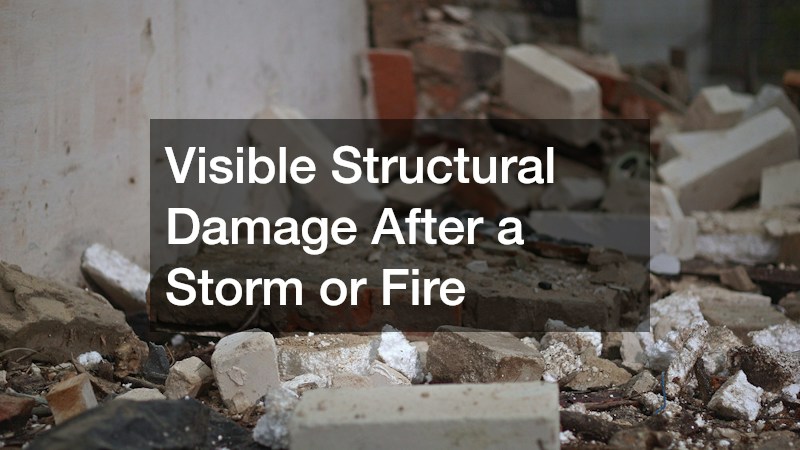
Severe weather events can leave behind damage that is not always obvious at first glance, from compromised load-bearing walls to a roofline that has shifted slightly out of alignment. High winds, hail, and heavy snow loads can weaken a structure’s framing without causing any visible exterior breach, which is why damage sometimes goes unnoticed for weeks or even months after the event. Cracks that appear suddenly after a storm, doors and windows that no longer close properly, or a noticeable sag in the roofline are all signs that the structure needs a professional assessment right away. Other red flags include hairline fractures spreading across drywall or foundation walls, gaps forming between the ceiling and walls, and a musty smell that can indicate water intrusion behind the surface.
Fire damage brings its own set of concerns, since even areas untouched by flames can suffer from heat warping, smoke saturation, or weakened framing that is not apparent until a wall or ceiling is opened up. Homeowners should also watch for soot staining around vents or eaves, as this can point to smoldering damage inside wall cavities that was never fully extinguished. A structural engineer or licensed contractor can determine whether the damage is cosmetic or load-bearing, and that distinction often changes the entire scope and cost of the repair. These situations sometimes require tearing out damaged sections before any rebuilding can begin, and in more severe cases, local building codes may require a full permit review before any reconstruction starts. Acting quickly not only reduces the risk of further deterioration but can also simplify the insurance claims process, since adjusters typically want documentation of damage before repairs get underway.
Storms and fires rarely leave damage that’s limited to cosmetic repairs. Cracked foundations, scorched framing, and compromised load-bearing walls are common after severe events, and these issues often aren’t safe to work around. When damage is extensive, demolition contractors are often brought in to safely remove compromised structures before new construction starts, ensuring the site is clear and stable. This stage isn’t just about tearing things down. A qualified contractor will assess which sections of a structure are salvageable versus which pose ongoing safety risks, since removing too little can delay permitting while removing too much adds unnecessary cost. They’ll also coordinate with insurance adjusters and local building inspectors, since documentation of the damage is often required before demolition can legally proceed. This process also typically involves a dumpster rental to manage the volume of debris generated, since storm and fire cleanup produces far more waste than a typical renovation.
A single fire-damaged room can generate several tons of charred material, while storm debris often includes waterlogged drywall, insulation, and broken framing that’s heavier and bulkier than standard construction waste. Homeowners should expect to need a larger container size than they would for a routine remodel, and in some cases, multiple hauls over the course of the cleanup. Handling this stage properly sets the foundation, sometimes literally, for a smooth rebuild. Skipping steps here, whether it’s improper debris removal or incomplete structural teardown, tends to surface later as costly surprises once construction begins.
Multiple Exterior Issues Appearing at the Same Time
Sometimes the clearest sign of a bigger project is not one dramatic problem but several smaller ones showing up within the same year or two. A roof nearing the end of its life, a deck with soft spots, and an aging fence all happening around the same time often means your home’s exterior components were installed around the same era and are naturally wearing out together. This pattern is common in homes built 20 to 30 years ago where original materials have simply run their course. Asphalt shingles typically last 20 to 25 years, pressure-treated deck lumber holds up for about 15 to 20 years, and wood fencing often needs replacing within a similar window. If your home was built or last renovated in that same stretch of time, it makes sense that these components would start failing in close succession rather than one at a time.
Watch for overlapping clues: granule loss or curling shingles on the roof, graying and splintering boards on the deck, and leaning or rotting fence posts. Siding that’s chalking or cracking, along with gutters pulling away from the fascia, often belongs to this same cluster of age-related wear. Seeing two or three of these issues at once is a strong signal that you’re not dealing with isolated repairs but a broader pattern of materials reaching the end of their service life together. Recognizing this pattern early matters because it changes how you plan. Rather than tackling each issue as a separate emergency repair, it’s often more cost-effective to bundle related projects, coordinate contractors, and budget for a season of exterior work rather than years of piecemeal fixes.
When faded siding, an aging roof, and a sagging fence all show up within the same year or two, it’s rarely a coincidence. Exterior materials installed around the same time tend to wear out together, which means one visible problem is often a preview of others still developing out of sight. Treating these as a single renewal project, rather than three separate emergencies, puts homeowners in a much stronger position. When facing this kind of widespread renewal, it often makes sense to think about the project holistically rather than tackling each issue in isolation. Consulting with a home builder who can coordinate multiple exterior updates, from roofing to decking to fencing, often results in better scheduling and more consistent design choices than hiring separate contractors for each piece.
A single point of coordination also means fewer scheduling conflicts, less duplicated site prep, and one warranty conversation instead of four. This approach can also reveal opportunities to improve drainage, energy efficiency, or layout that wouldn’t be obvious if each project were handled separately. For example, regrading the yard while the fence is down, or adding better flashing while the roof is already open, can prevent future water damage at little extra cost. Bundling projects can also strengthen a homeowner’s negotiating position on materials and labor, since contractors often offer better pricing on combined, larger-scope jobs than on several small, disconnected ones.
Conclusion
Exterior wear rarely happens all at once, which is exactly why it is easy to dismiss small signs until they become expensive problems. Paying attention to granule loss, soft decking, cracked concrete, and other warning signals gives you the power to plan ahead rather than react under pressure. The next step is simple: walk around your property this weekend, take note of anything on this list, and reach out to the right professional before a minor issue turns into a major renovation.